ComfyUI: Modular Image Generation Architecture
Moving beyond basic web UIs to 'Node-Based' generative pipelines. How ComfyUI enables granular control over every step of the diffusion process.

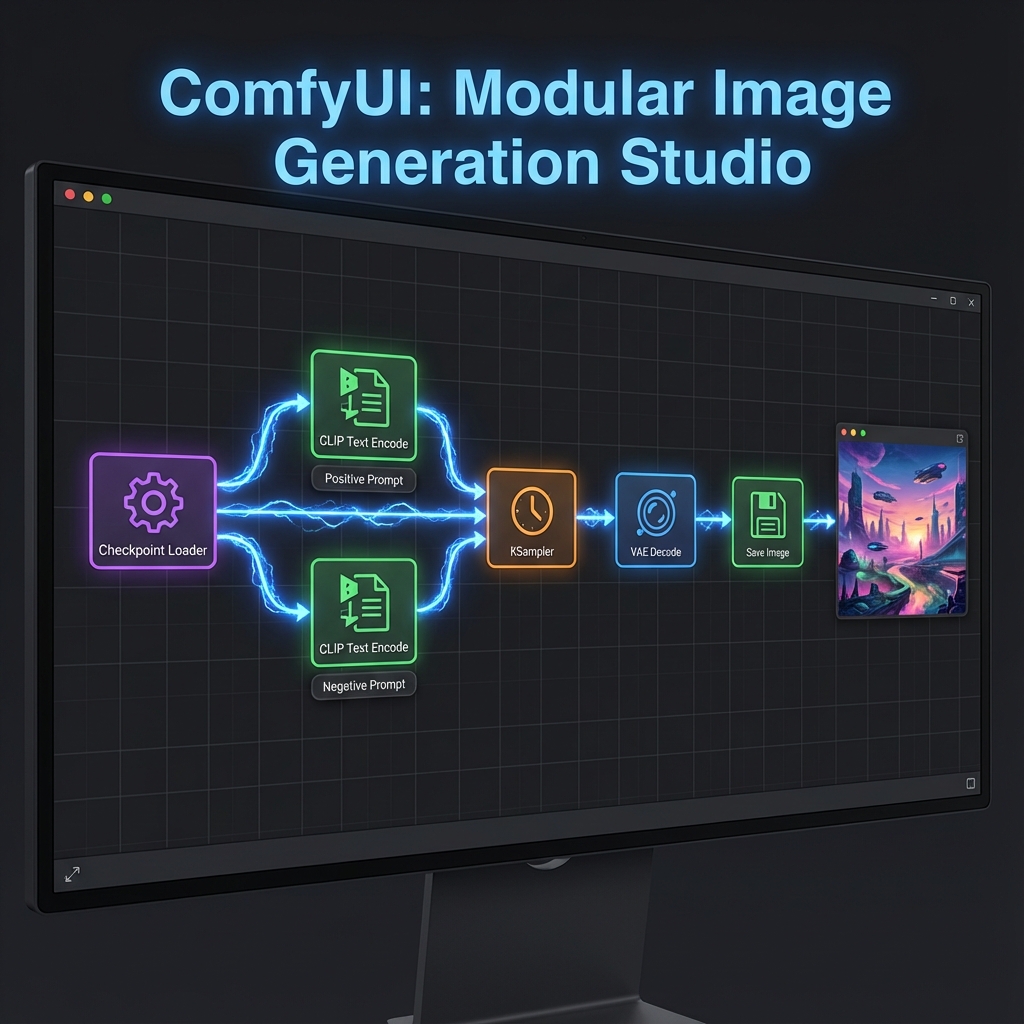
Project Overview
Standard interfaces like Automatic1111 mask the complexity of diffusion models. ComfyUI exposes the internal wiring. By treating the latent space, VAE, CLIP, and Sampler as separate 'nodes', we can build complex workflows—like 'Hires Fix', 'Inpainting', and 'ControlNet Stacking'—that simple UIs cannot handle. It is the professional's choice for reproducibility.
System Architecture
ComfyUI operates on a graph execution model. Data flows from left to right: Checkpoint Loader -> CLIP Text Encode -> KSampler -> VAE Decode -> Save Image. Because it caches intermediate results (like model loading), tweaking a prompt at the end of a chain doesn't require reloading the 6GB checkpoint, making iteration incredibly fast.
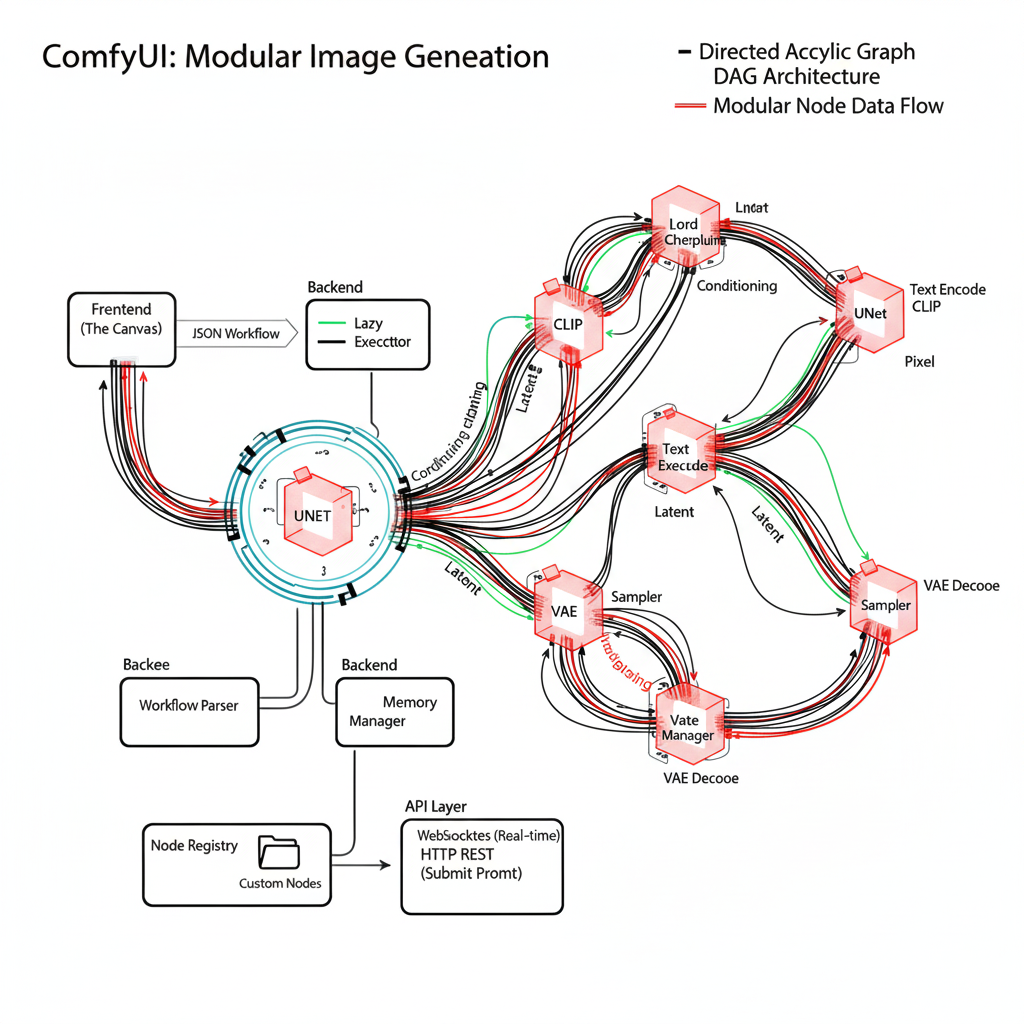
Checkpoint Loader
Loads the Safetensors model into VRAM.
KSampler
The core engine performing the denoising steps.
ControlNet Stack
Injecting structural guidance (pose, edges) into generation.
Latent Upscaler
Upscaling images in latent space for sharpness.
Implementation Details
Code Example
// Workflow JSON snippet\n{\n "3": {\n "inputs": {\n "seed": 12345,\n "steps": 20,\n "cfg": 8,\n "sampler_name": "euler",\n "scheduler": "normal",\n "denoise": 1,\n "model": ["4", 0],\n "positive": ["6", 0],\n "negative": ["7", 0],\n "latent_image": ["5", 0]\n },\n "class_type": "KSampler"\n }\n}Agent Memory
Use the 'Efficiency Nodes' pack to create XY plots directly in Comfy. You can iterate over CFG Scale vs Steps to find the sweet spot for a specific model without generating images one by one.
Workflow
Process initiated
Analysis performed
Results delivered
Results & Impact
"ComfyUI saved our production pipeline. The ability to save a graph as a JSON file meant we could version control our image generation logic."
Speed
Optimized VRAM usage allows generation on lower-end GPUs.
Reproducibility
Exact node settings ensure consistent output.
Modular
Easily swap out components (e.g., change VAE) without breaking flow.
About the Author
Parmeet Singh Talwar
AI Context Engineer
Apex Neural
Parmeet engineers context-driven AI that combines LLMs with structured backend architecture and multi-platform integrations. He builds AI-powered systems with secure OAuth, fine-tunes open-source LLMs, and integrates image and video generation into production pipelines. Focused on clean design and system reliability.
Contributors

Ready to Build Your AI Solution?
Get a free consultation and see how we can help transform your business.