DBaaS E-Books
Democratizing founder knowledge through AI-driven content generation.

Project Overview
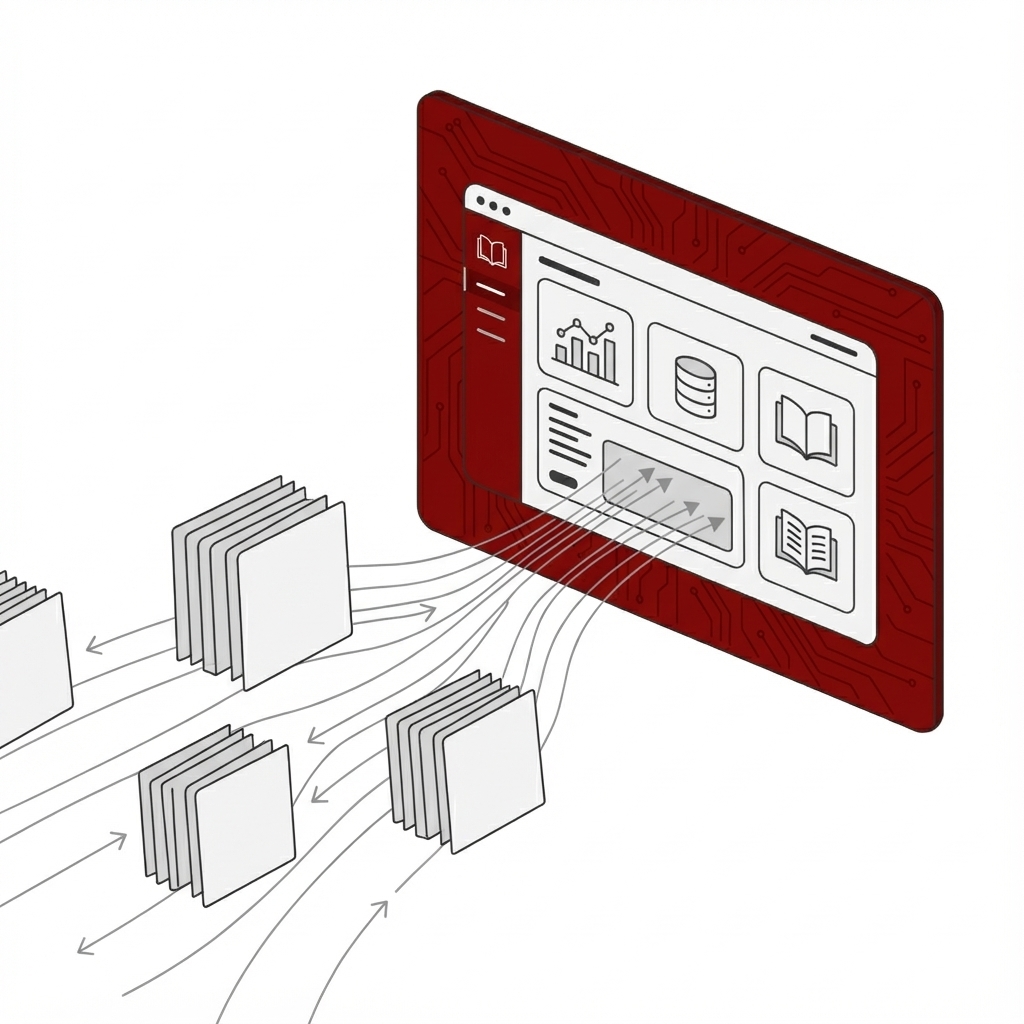
DBaaS E-Books is a knowledge distribution engine designed to bridge the gap between complex technical concepts and actionable business execution. Powered by the Tale-weaver core, it dynamically generates structured educational content—from EPUBs to PDFs—teaching founders how to discover ideas, validate markets, and execute builds. It transforms raw knowledge into distinct, consumable learning paths.
System Architecture
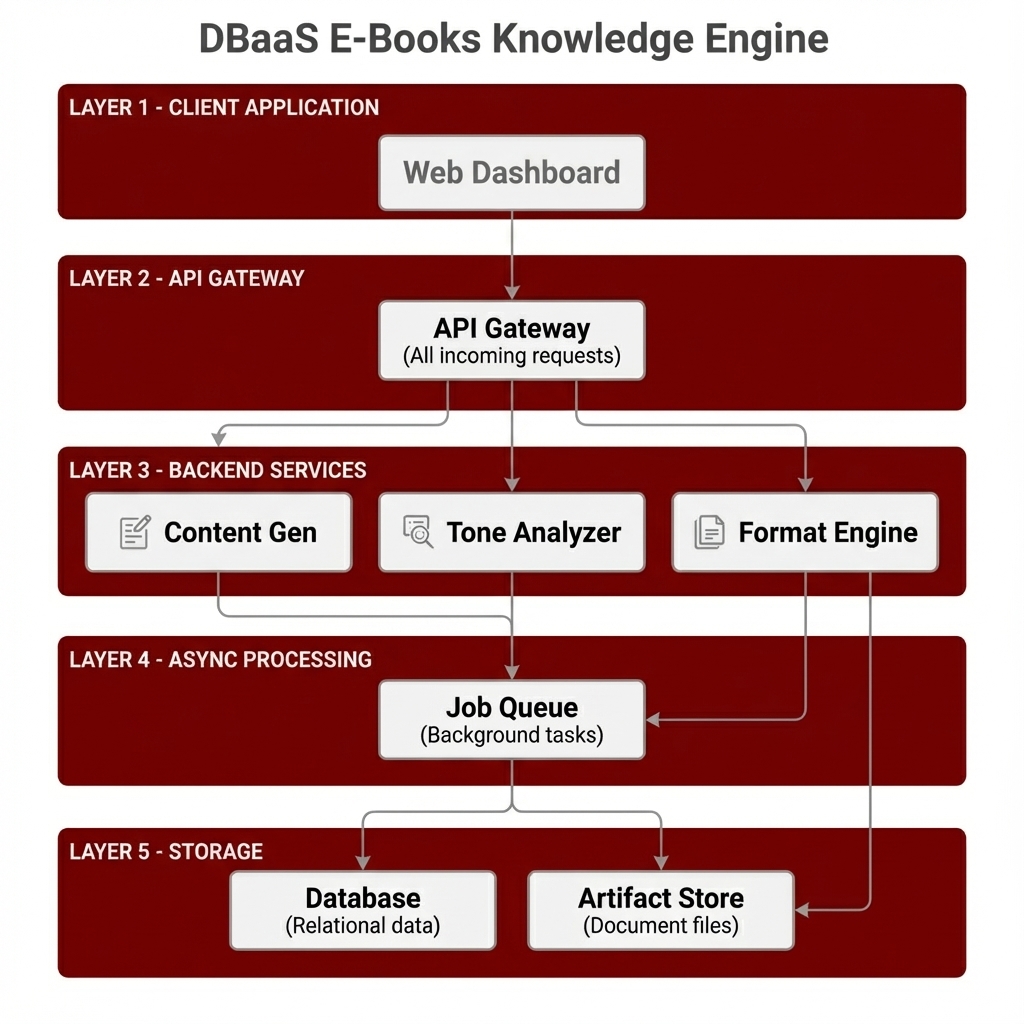
The system utilizes a modular backend service (`Tale-weaver`) to orchestrate content generation. It decouples the writing tone, genre structure, and output formatting (EPUB/PDF) from the core content logic. This allows for dynamic re-packaging of knowledge into various formats suitable for e-readers or print.
Content Engine
Core logic handling genre selection, tone adjustment, and chapter outlining.
Format Service
Python-based renderer (`ebooklib`, `reportlab`) converting text to professional layouts.
Metadata Layer
Injects author bios, synopses, and semantic tagging for specialized outputs.
AI Orchestrator
Drives the narrative flow ensuring consistency across multi-chapter volumes.
Implementation Details
Code Example
async def create_epub(book_data: BookData) -> bytes:
    """Generate an EPUB file from book data."""
    book = epub.EpubBook()

    # Dynamic Metadata Injection
    book.set_identifier(book_data.id)
    book.set_title(book_data.title)
    book.add_author(book_data.author)

    # Modular Chapter Assembly
    for chapter in book_data.chapters:
        epub_chapter = epub.EpubHtml(
            title=chapter.title,
            file_name=f"chapter_{chapter.chapter_number}.xhtml"
        )
        # Content injection with semantic styling
        epub_chapter.content = f"<h2>{chapter.title}</h2>{chapter.content}"
        book.add_item(epub_chapter)

    return output.read()
Agent Memory
By treating book content as structured data (`BookData` schema), the system can instantly repurpose the same core knowledge into different outputs—generating a technical manual, a narrative guide, or a checklist summary without rewriting the source material.
Workflow
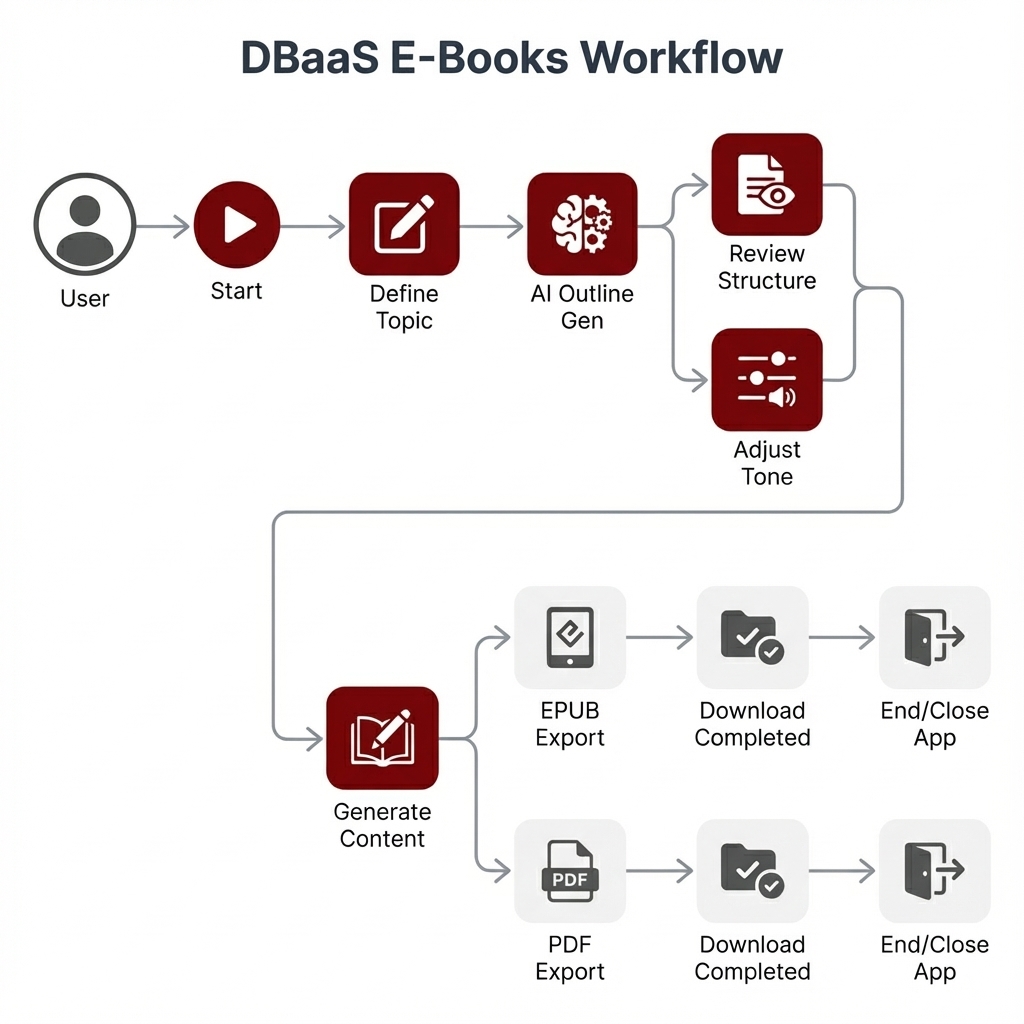
The learning journey for the end-user mirrors the creation process. Founders start by consuming content on Idea Discovery, move to Market Validation methodologies, Apply these frameworks to their projects, and finally Execute using the strategies outlined in the generated guides.
Results & Impact
"The structured approach to idea validation saved us months of aimless building. It's like having a co-founder in book form."
Actionable Knowledge
Readers move from theory to practice with step-by-step validation frameworks.
Rapid Dissemination
New best practices are instantly compiled and distributed to the community.
Standardized Success
Provides a common lexicon and methodology for the entire DBaaS ecosystem.
About the Author
Parmeet Singh Talwar
AI Context Engineer
Apex Neural
Parmeet engineers context-driven AI that combines LLMs with structured backend architecture and multi-platform integrations. He builds AI-powered systems with secure OAuth, fine-tunes open-source LLMs, and integrates image and video generation into production pipelines. Focused on clean design and system reliability.
Contributors

Ready to Build Your AI Solution?
Get a free consultation and see how we can help transform your business.