Fantasy Cricket Live Auction Platform for IPL 2026
How we built a production‑ready, real‑time fantasy cricket auction system with smooth bidding, live timers, and team management for IPL 2026.

Project Overview
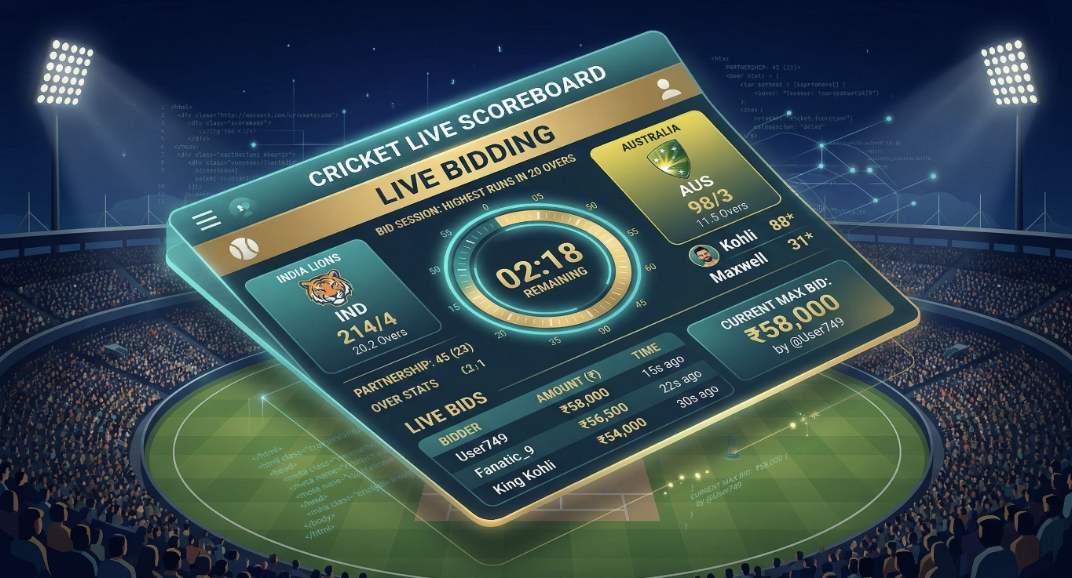
For IPL 2026 we needed more than a static fantasy scoreboard. The vision was a live, commissioner‑controlled auction room: nominate players, run 30‑second bid windows, track budgets and squads in real‑time, and make it simple for casual players to join via invite links. We evolved an earlier Google‑Sheets‑driven scoring app into a full fantasy auction platform built on FastAPI, PostgreSQL, Redis, and a Next.js 16 front‑end.
System Architecture
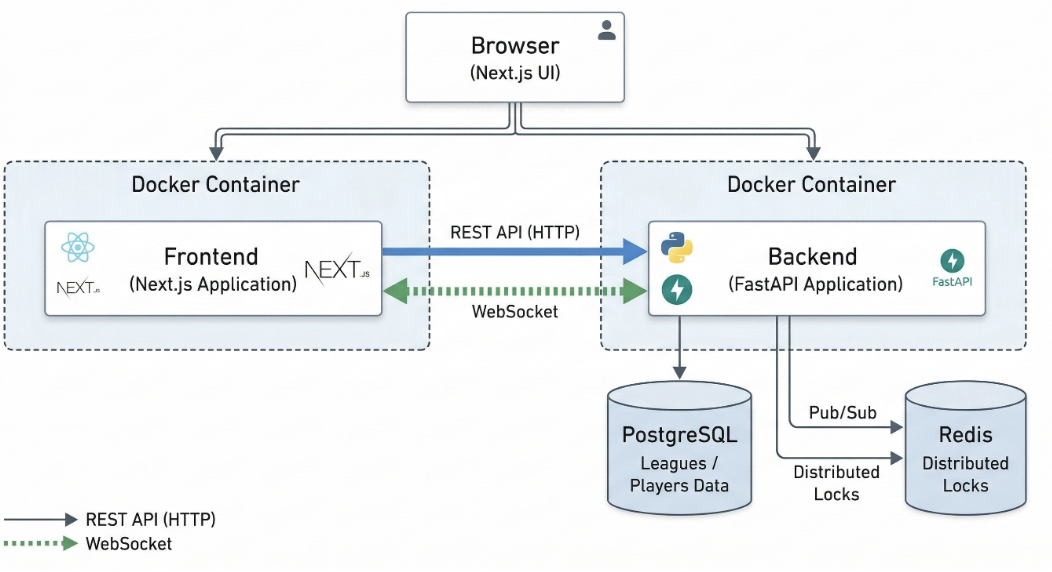
The system is split into a FastAPI backend and a Next.js 16 frontend, both Docker‑deployed. PostgreSQL stores users, leagues, teams, auction state snapshots, and the player pool. Redis powers WebSocket fan‑out and distributed locks for bid processing. The frontend connects via secure WebSocket per league, rendering an auction board with current player, live countdown timer, bids, and skipped players. Admin flows (commissioner controls, league creation, invites) use REST APIs; bidding and timer events use WebSockets.
Next.js 16 Frontend
Auction dashboard, commissioner controls, join‑by‑invite flow, and a polished countdown UI using React 19 and standalone output for containerized deployment.
FastAPI Backend
Authentication, league and team management, player imports, auction orchestration, and health/metrics endpoints. Uses SQLAlchemy + Alembic for PostgreSQL.
Auction Manager + WebSocket Gateway
Server‑authoritative in‑memory auction state per league, guarded by asyncio locks and Redis‑based bid locks; exposes a typed WebSocket protocol for bidding and timer events.
Player Pool Import
Deterministic seed from `raw_ipl_2026.txt` with `Name|Role|Country` format, feeding the `PlayerMaster` table and league‑scoped `LeaguePlayer` records.
Implementation Details
Code Example
# Simplified: server-authoritative bid handling and timer extension

async def place_bid(self, league_id: str, bid: int, bidder: str) -> tuple[bool, str]:
    lock = get_bid_lock(int(league_id))
    acquired = await asyncio.to_thread(lock.acquire, blocking=True)
    if not acquired:
        return False, "Could not acquire bid lock"

    try:
        queue = self._get_bid_queue(league_id)
        queue.append({"bid": bid, "bidder": bidder})
        now = _utc_timestamp()

        while queue:
            current = queue.pop(0)
            async with self._lock:
                state = self._leagues[league_id]["state"]
                if state["auction_state"] != AuctionPhase.BIDDING.value:
                    return False, "Auction not active"

                current_price = int(state.get("current_bid") or 0)
                new_bid = int(current["bid"])
                if new_bid <= current_price:
                    return False, "Bid must be higher"

                # Read current deadline
                ts = state.get("timer_end_timestamp")
                remaining = float(ts) - now if ts is not None else 0.0

                # Update price + bidder
                state["current_bid"] = new_bid
                state["highest_bidder"] = current["bidder"]

                # Only extend in the last-second window; otherwise keep the deadline
                if remaining > 0 and remaining <= LAST_SECOND_EXTEND_THRESHOLD:
                    state["timer_end_timestamp"] = now + LAST_SECOND_EXTEND_BY
                elif remaining <= 0:
                    timer_sec = state.get("bid_timer_seconds") or BID_TIMER_RESET
                    state["timer_end_timestamp"] = now + int(timer_sec)

        asyncio.create_task(self.save_snapshot(league_id))
        return True, ""
    finally:
        await asyncio.to_thread(lock.release)
Agent Memory
We made `timer_end_timestamp` the only trusted value for the countdown and derived the visible timer from it both on the server and client. The frontend uses a local 1‑second tick with that timestamp instead of mixing multiple timer fields, which removed flicker and made the auction feel rock‑solid in live use.
Workflow
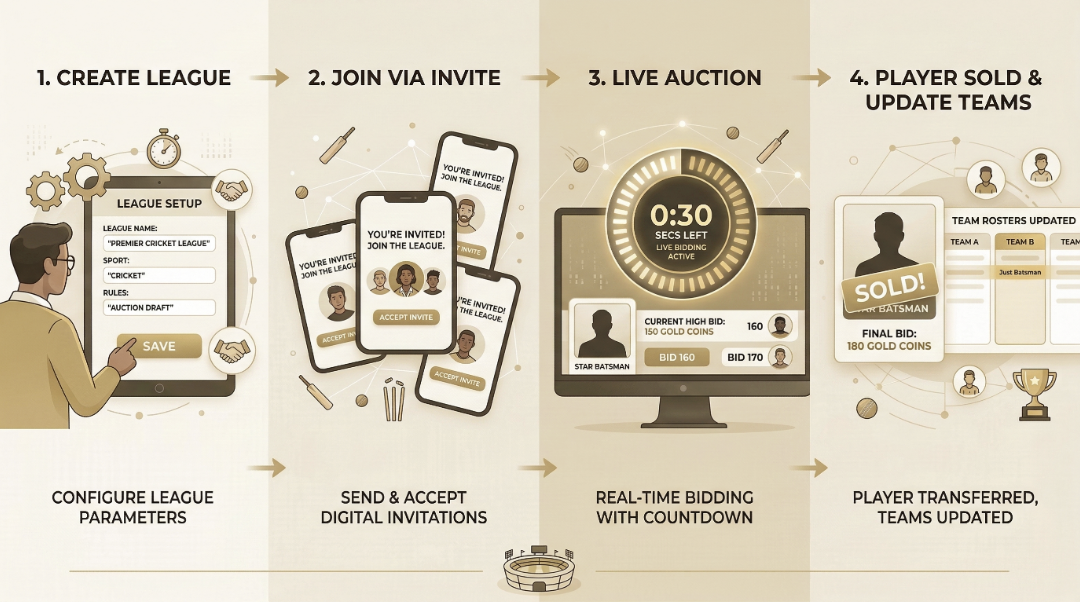
A typical auction starts when the commissioner creates a league, links the player pool, and shares invite links. Once 2+ teams join, the commissioner loads the next player, starting a 30‑second timer visible to all bidders. Team owners place quick‑increment bids via WebSocket messages. The server validates budgets and player limits, updates the current price, and broadcasts timer ticks. When the timer expires without a new bid, the player is sold and appended to the sold‑history, and the next player can be nominated or auto‑loaded.
Results & Impact
"Running our IPL 2026 fantasy auction felt smoother than most commercial platforms. The live timer, clear budget view, and skipped‑player list kept everyone in sync, even with 20+ bidders online."
Reduced admin overhead
Commissioners manage everything in‑app: invites, team creation, auction start/stop, and round progression—no more juggling spreadsheets during bidding.
Fair and transparent bidding
Server‑side validation and single‑source‑of‑truth timers eliminated disputes about late bids, budgets, or timer resets.
Production‑ready deployment
Dockerized FastAPI and Next.js frontends run behind a reverse proxy with `/health/ready` checks, making it easy to deploy and scale on modern PaaS platforms.
About the Author
Likhith Kumar Masura
AI Context Engineer
Apex Neural
Building real-world AI systems with LLM integrations, RAG pipelines, and FastAPI backends. Designs modular, multi-tenant SaaS systems with secure API-first development, RBAC, and containerized deployments.
Ready to Build Your AI Solution?
Get a free consultation and see how we can help transform your business.