ResearchFlow MCP: Autonomous Deep Research Protocol
A powerful Model Context Protocol (MCP) server that empowers LLMs to perform recursive, deep-dive internet research tasks autonomously.

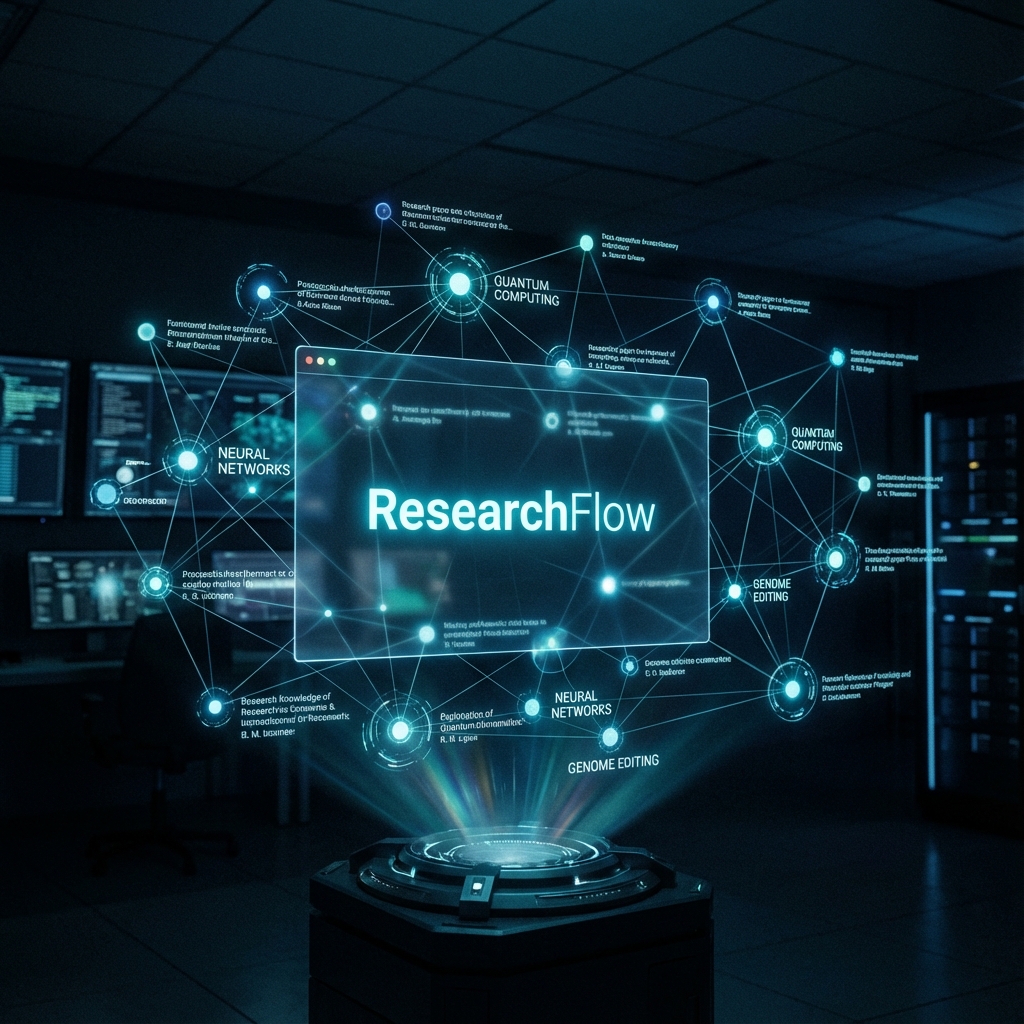
Project Overview
Current LLMs struggle with deep research. They hallucinate, stop after one search, or lack current data. ResearchFlow is an MCP server that bridges this gap. It provides a structured 'Deep Research' tool that enables Claude or Cursor to recursively search, analyze multiple sources, verify facts, and synthesize comprehensive reports in a single session.
System Architecture
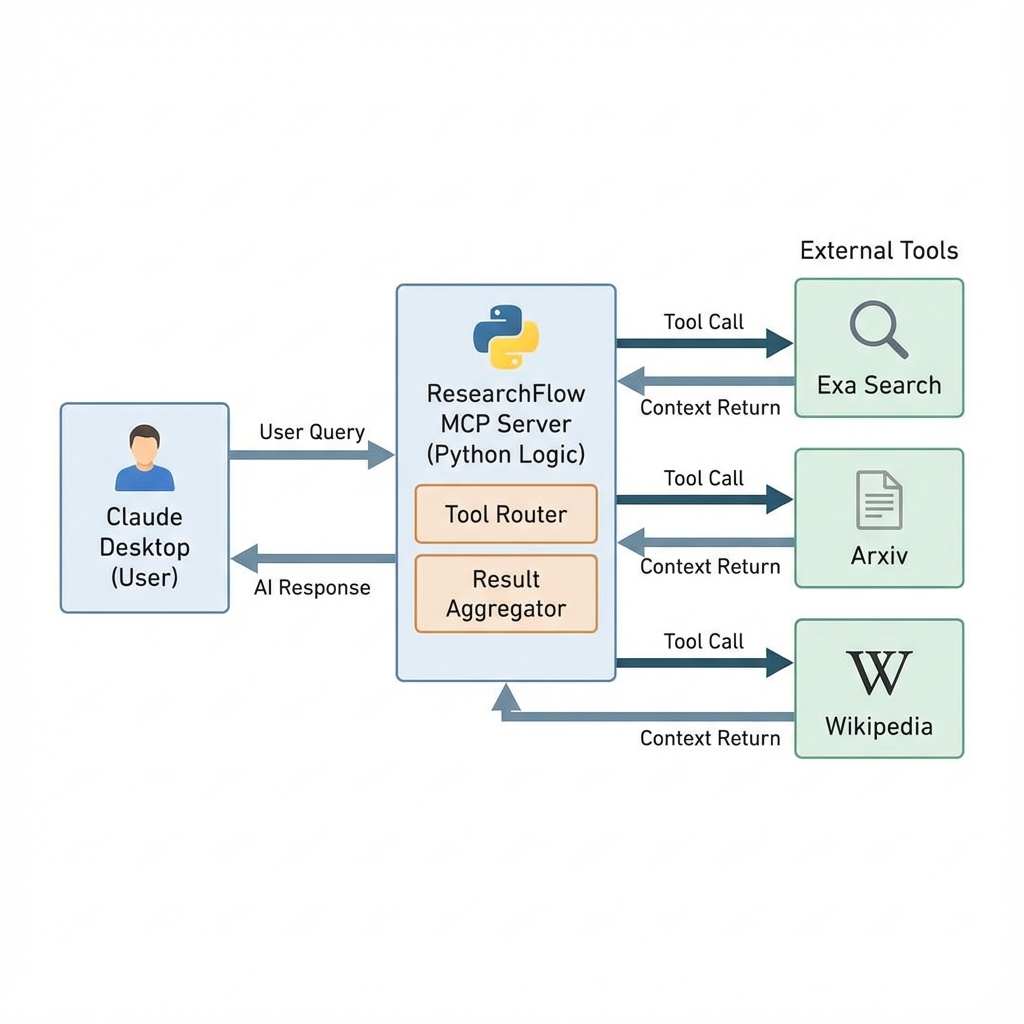
The ResearchFlow architecture places the MCP Server as the central conductor. When a user asks a complex question, the server orchestrates a multi-step plan. It calls external APIs (like Exa for neural search, Arxiv for papers) and feeds the results back to the LLM for synthesis, repeating the loop until the confidence threshold is met.
MCP Server
Python-based server implementing the Model Context Protocol.
Search Tools
Integrated connectors for Exa.ai, Google Search, and Wikipedia.
Planner Agent
Decomposes vague queries into actionable search steps.
Verifier
Cross-checks facts against multiple sources before final output.
Implementation Details
Code Example
@mcp.tool()\nasync def deep_research(topic: str, depth: int = 3):\n """Performs recursive research on a complex topic."""\n plan = await generate_plan(topic)\n results = []\n for step in plan:\n data = await search_engine.query(step.query)\n analysis = await analyzer.process(data)\n results.append(analysis)\n if is_sufficient(results): break\n return synthesize_report(results)Agent Memory
The key to ResearchFlow's power is the 'Recursive Loop'. It doesn't just search once; if the initial results are ambiguous, the agent autonomously generates clarification queries to dig deeper.
Workflow
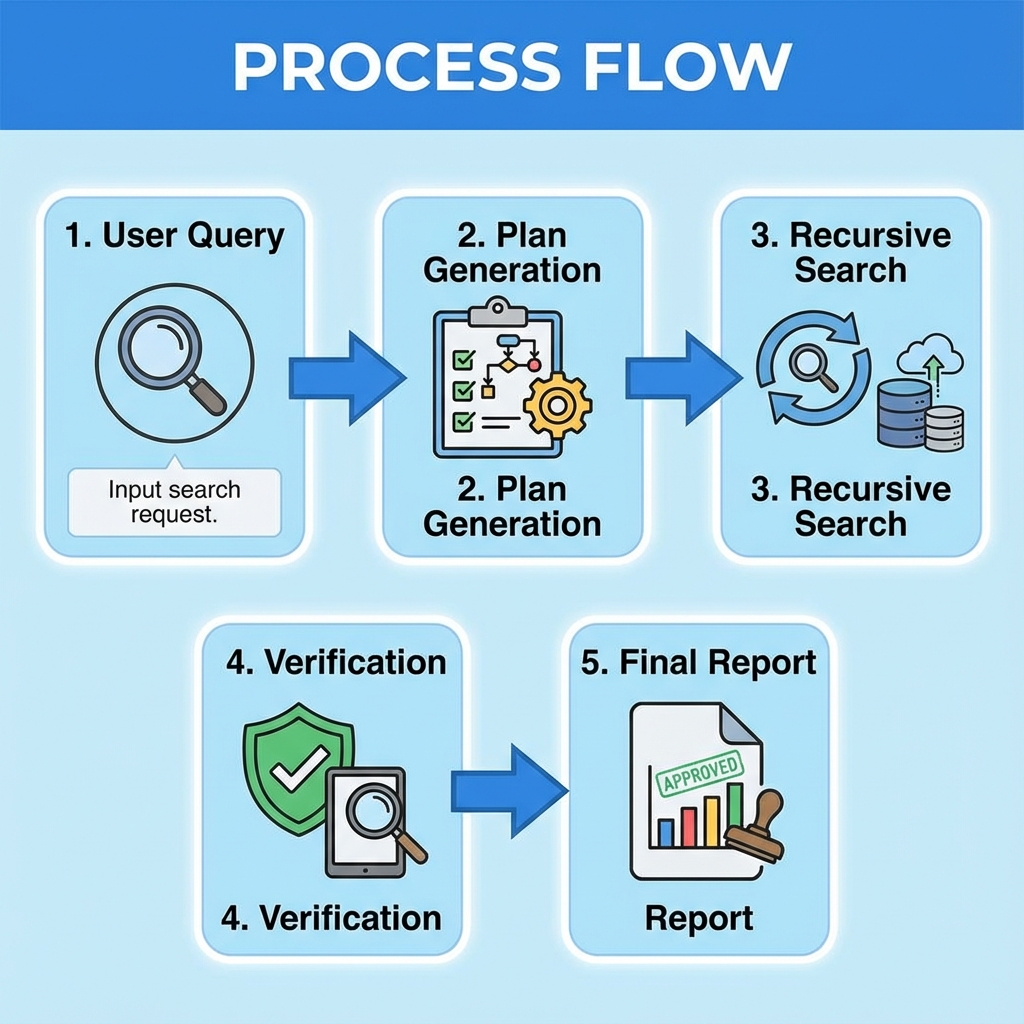
The user simply types a request like 'Research the impact of solid-state batteries on EV pricing'. The system then:\n1. Breaks the query into sub-questions.\n2. Executes parallel searches.\n3. Reads and summarizes top hits.\n4. Verifies overlapping facts.\n5. Generates a final, cited report.
Results & Impact
"ResearchFlow turns a 2-hour literature review into a 5-minute background task. It finds papers I would have definitely missed."
Speed
Accelerates information gathering by 20x.
Coverage
Aggregates data from 50+ sources per report.
Citation
Every claim is backed by a direct URL reference.
About the Author
Devulapelly Kushal Kumar
AI Context Engineer
Apex Neural
Kushal architects intelligence infrastructure that turns AI from a feature into a system. He designs multi-agent platforms combining backend engineering, structured reasoning, and enterprise governance. Work spans agentic orchestration, secure LLM integrations, and scalable cloud-native deployments.
Ready to Build Your AI Solution?
Get a free consultation and see how we can help transform your business.