Galactic Therapeutics – AI Toxicity Prediction & Chemical Safety Intelligence
In-silico toxicity prediction to de-risk molecules faster and reduce animal studies.

Project Overview
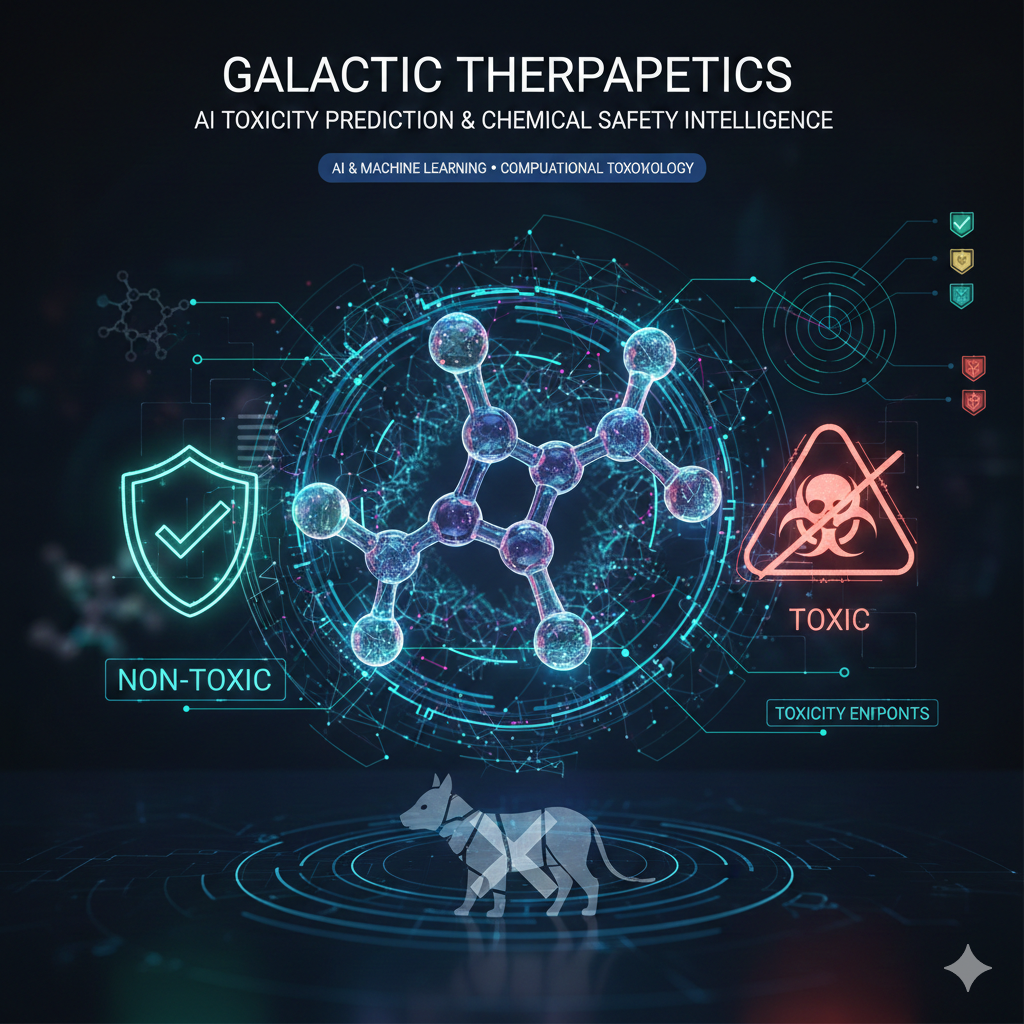
Pharmaceutical R&D must evaluate thousands of molecules for toxicity. Traditional assays are slow and expensive. Galactic Therapeutics provides an AI engine that classifies compounds as toxic/non-toxic, estimates severity, and surfaces risk mechanisms before lab work starts. It extends ideas from systems like ProTox-3.0 into a productized safety intelligence layer.
System Architecture
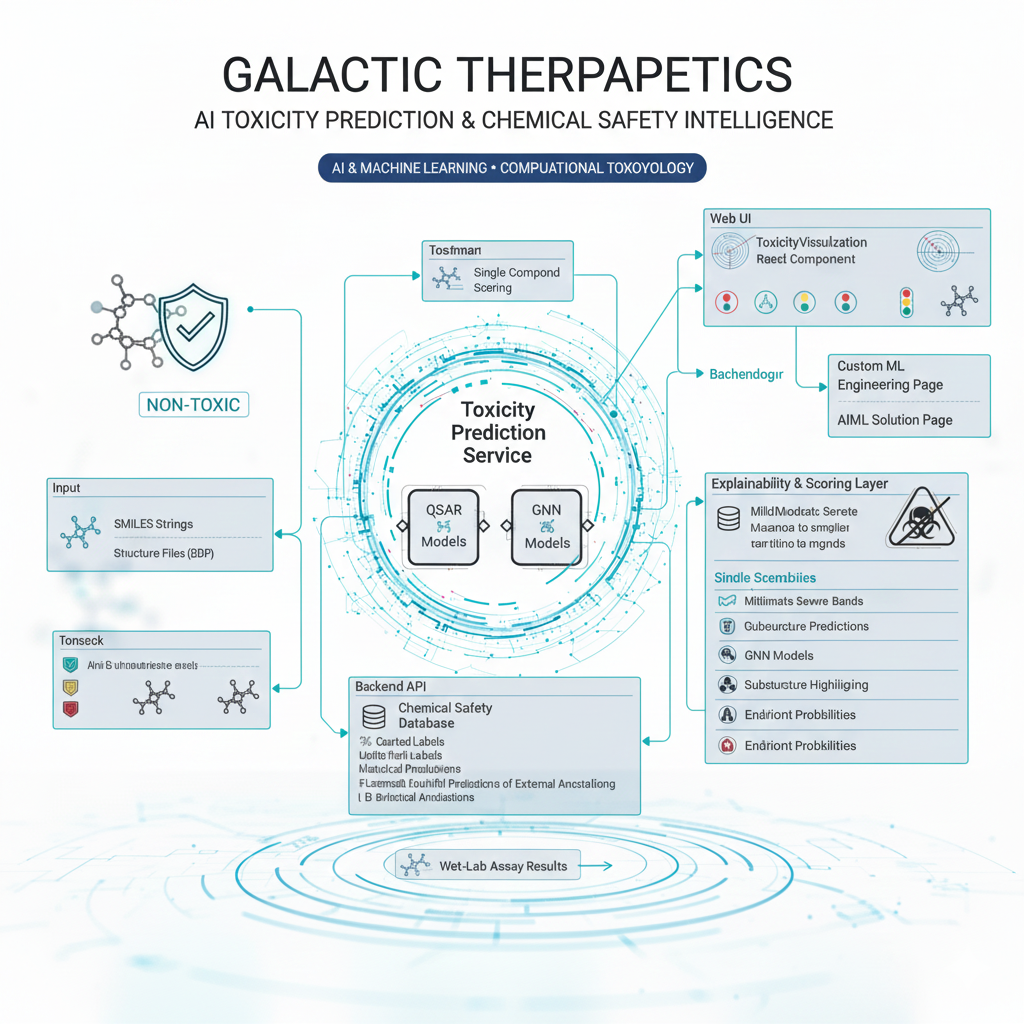
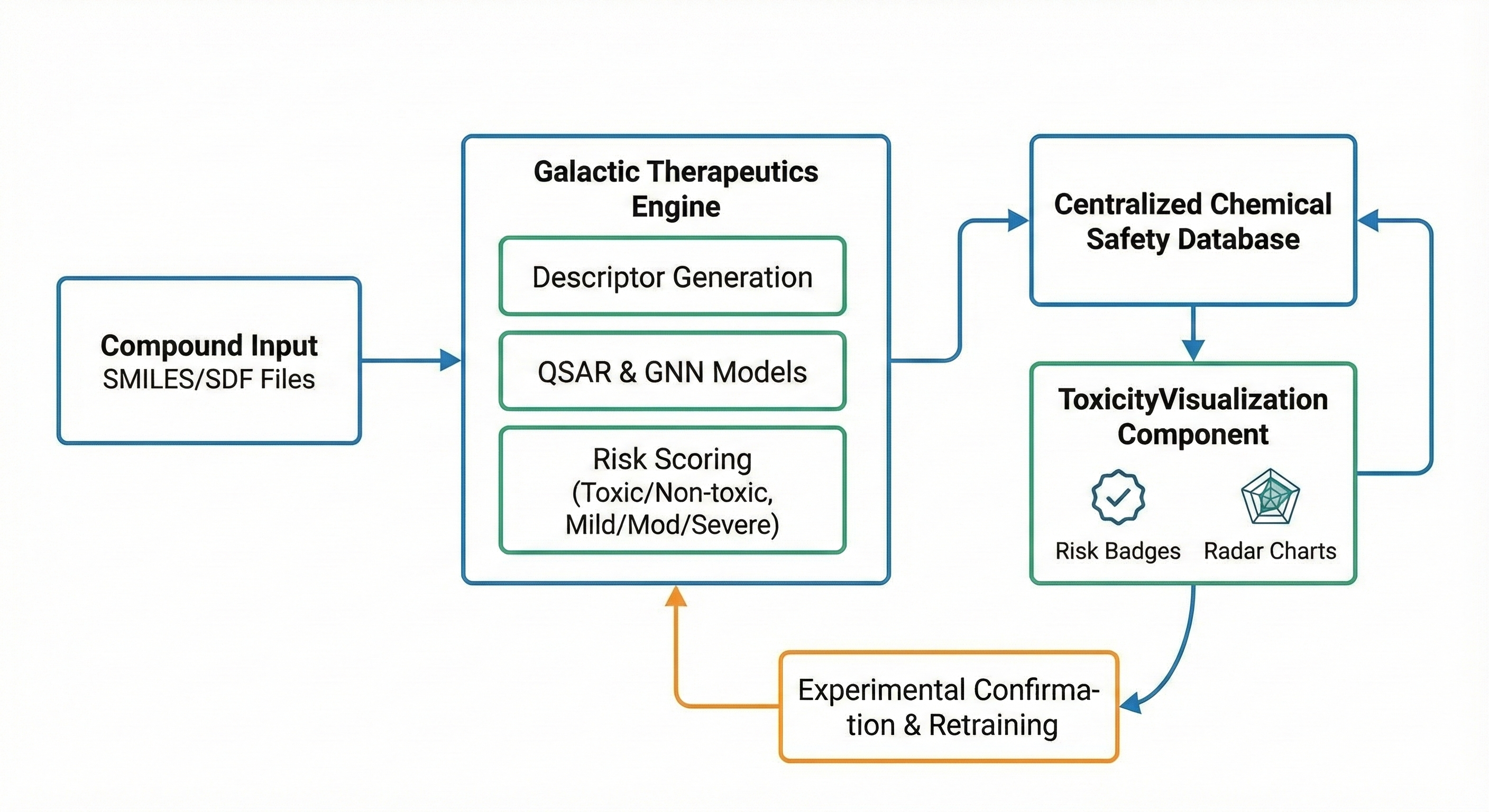
Built as a toxicity prediction microservice. Accepts molecular structures (SMILES), computes descriptors/graph features, and runs them through an ensemble of QSAR and GNN models. A centralized database stores chemicals and predictions, while a React frontend visualizes risk radar plots.
Toxicity Prediction Engine
Microservice with QSAR and GNN models for classification
Safety Database
Stores compounds, predictions, and external annotations
Explainability Layer
Surfaces substructures and feature contributions for risk
React Visualization
Frontend component for rendering toxicity radar plots and badges
Implementation Details
Code Example
def predict_toxicity(smiles):
    mol = Chem.MolFromSmiles(smiles)
    descriptors = calc_descriptors(mol)
    graph_features = mol_to_graph(mol)

    # Ensemble prediction
    qsar_score = qsar_model.predict(descriptors)
    gnn_score = gnn_model.predict(graph_features)
    final_risk = ensemble(qsar_score, gnn_score)

    return explain_risk(final_risk, mol)
Agent Memory
Use external benchmarks (like Tox21) and cross-validation to avoid overfitting. Provide chemist-friendly explainability (LD50 bands, toxic substructures) to build trust.
Workflow
Input: Scientist submits SMILES/Structure.\n2. Processing: Engine computes molecular descriptors and graph embeddings.\n3. Prediction: QSAR/GNN ensemble assigns risk bands (Mild/Moderate/Severe).\n4. Storage: Results saved to Safety Database.\n5. Visualization: UI displays risk radar and qualified alerts.
Results & Impact
"Galactic Therapeutics gave our chemists an always-on toxicity radar. We drop risky molecules before animal studies, saving time and budget."
Faster Screening
Bulk triage of candidates before wet-lab assays.
Reduced Animal Testing
Supports 3R principles by prioritizing safer molecules.
Better Decisions
Unified risk scores help teams discuss tradeoffs transparently.
About the Author
Sunnykumar Lalwani
Principal Engineer - Backend and Systems Architecture
Apex Neural
12+ years designing high-performance backend and distributed systems. Expertise in scalable system design, DevOps automation, and cloud-native infrastructure. Strong focus on AI-powered applications, LLM integrations, and data-driven workflows. Combines hands-on full-stack work with architectural governance.
Contributors

Ready to Build Your AI Solution?
Get a free consultation and see how we can help transform your business.